As the 2026 midterm elections near, both of the capitalist rulers’ central political parties — the Democrats and Republicans — are looking for every angle to boost their chances to come out on top in November.
In this context, the U.S. Supreme Court in an April 29 decision overturned congressional districts drawn up in Louisiana that would have created a second Black-majority district. Writing for the 6-3 majority, Justice Samuel Alito called this “an unconstitutional racial gerrymander.” Democrats responded with furious protests across the country.
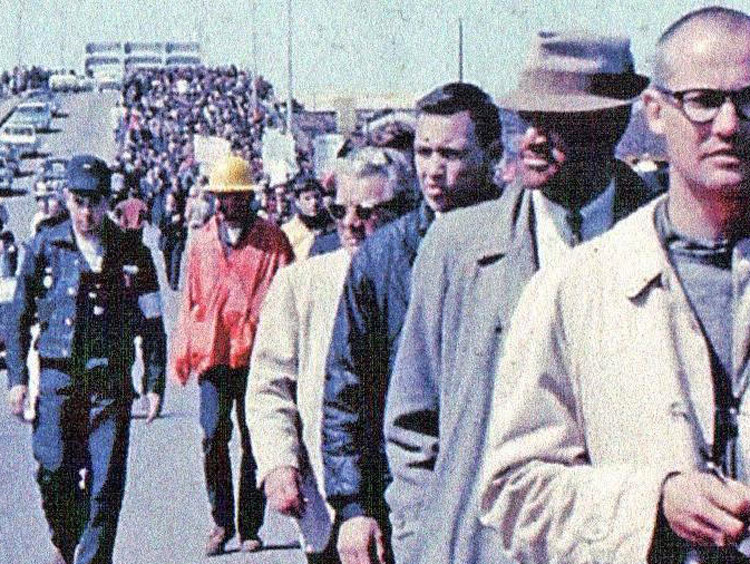
They claimed the court had eviscerated the very heart of the Voting Rights Act, which was adopted in 1965 on the heels of a yearslong hard-fought battle that culminated in the Selma to Montgomery march in Alabama. This victory was a conquest of the Black-led working-class movement that uprooted Jim Crow segregation and transformed working people in the U.S.
Today, wherever either the Democrats or Republicans have a majority in the state legislature, they’re redrawing congressional voting maps to secure partisan advantage and wipe out districts that favor their chief rival.
Louisiana’s government had gerrymandered its six congressional districts in 2024 to create a second district with a Black majority, without showing this was needed to counter past discrimination. The Supreme Court ruling said this was improper, pointing to the Reconstruction-era 15th Amendment, which says the right of citizens to vote “shall not be denied or abridged by the United States or by any State on account of race, color, or previous condition of servitude.”
In a concurring opinion, Justice Clarence Thomas noted the court ruling overturned a previous interpretation of the Voting Rights Act that “systematically divid[ed] the country into electoral districts along racial lines.”
In her dissenting opinion, Justice Elena Kagan said, “Black residents vote heavily for Democratic candidates, while White residents vote heavily for Republicans.” Without Black-majority districts, she said, Black votes will be “wasted.” What she means, but won’t openly say, is that Democrats will gain fewer seats.
Historic changes resulting from the fight for Black rights are reflected in the fact that in 2023 there were 30 Blacks who had been elected to Congress from majority-Caucasian districts. Overwhelmingly, workers vote for who they hope will make life better for them, not on whether a candidate’s skin color is the same as their own.
The court’s April 29 ruling accurately describes the numerous ways Blacks were barred from voting before the powerful Black rights fight overturned Jim Crow segregation. These included poll taxes, literacy tests, property qualifications, Caucasian-only primary elections and racial gerrymandering.
Segregation was enforced, above all, with bloody Ku Klux Klan beatings and lynchings.
One example of racial gerrymandering was the redistricting by Alabama’s pro-segregation government in Tuskegee. It removed all but five of the city’s 400 Black voters and put them in other districts, but didn’t move a single Caucasian voter. The aim of the measure, overturned by the Supreme Court in 1960, was to disperse Black voters and prevent them from affecting the city’s politics at the height of the fight for Black rights. Kagan asserts the April 29 court ruling will lead to “the largest reduction in minority representation since the era following Reconstruction,” when the capitalist rulers imposed Jim Crow.
Joining the chorus, former Democratic President Barack Obama claimed the court ruling “guts a key pillar of the Voting Rights Act.”
But this simply isn’t true. Only one small section of the act is altered. “Of course, no one’s right to cast a vote will be affected,” Washington Post columnist Jason Willick wrote May 3.
“For Kagan,” he says, “voting in a jurisdiction where your favored candidate will lose is next to meaningless.”
Lasting gains were won in Black rights fight
The ruling leaves intact the decisive measures adopted in the 1965 Voting Rights Act that registered the right of Blacks to vote. That law banned “qualification or prerequisite to voting,” directing the attorney general to take action against the use of poll taxes or other barriers.
Democrats are now on a crusade to gerrymander 2026 congressional districts to improve their chances. Democratic leader Hakeem Jeffries vowed May 11 his party will “bury” Republicans “with a massive Democratic redistricting counteroffensive” for the 2028 presidential election.
Republicans are doing exactly the same thing.
In Virginia, the state’s Supreme Court struck down a gerrymander for its 11 districts May 8 that Democrats had pushed through to give them a 10-1 seat majority. The court ruled the legislature had rammed through the changes without getting them adopted by votes in two separate legislative sessions, as is required by law. Enraged, Democrats say they’ll retaliate by using their majority to purge all six Justices. They plan to do this by dropping the age requirement to sit on the state’s court to 54 or younger.
The heart of this dispute is the determination of the capitalist rulers to keep working people entrapped in their two-party shell game. But for the working class organizing independently of the capitalists’ parties is the only road forward. That question was at the center of the fight to end Jim Crow, with both the capitalist rulers’ parties upholding segregation until the mass movement that tore it down became too powerful.
Today one of the key ways the rulers maintain their political monopoly is through the bipartisan drive to keep the Socialist Workers Party and other working-class candidates off the ballot.