KUALA LUMPUR, Malaysia — “The unique history of Chinese in Cuba” was the title of a presentation at the 12th International Conference of ISSCO given by Mary-Alice Waters, president of Pathfinder Press and editor of Our History Is Still Being Written: The Story of Three Chinese Cuban Generals in the Cuban Revolution. The book is based on interviews with Armando Choy, Gustavo Chui and Moisés Sío Wong.
Her remarks were part of a panel that addressed the discrimination Chinese migrants have — or have not — faced in Malaysia, South Africa and in Cuba.
Waters began by saying that the contributions by the panelists before her provided a good counterpoint for understanding what is unique about the history of Chinese in Cuba. “Cuba is the only country in the world with a significant history of Chinese immigration where there is today virtually zero discrimination or prejudice against their descendants.”
This is the opposite of the experience of Chinese elsewhere, she noted, “as we’ve been discussing throughout this conference.” Given the deepening crisis of the capitalist system worldwide, “the owners of capital and their governments are always looking for scapegoats to divert attention from the real problem, which is capitalism. They want people to believe it’s ‘the Chinese,’ or people whose skin is Black, or ‘the Jews’ who are exploiting them.”
There’s a second thing that makes Cuba unique, Waters explained. It is the only country where working people have made a successful socialist revolution in the last 75 years. “They eliminated the economic foundations of racism and that’s what made it possible, unlike elsewhere, to tackle discrimination of Cubans who are Chinese and Cubans who are black.”
Today, she said, there are no traditional “Chinese” occupations like laundries, and no glass ceilings for Cubans of Chinese ancestry. “There is no level of leadership where you will not find Cubans of Chinese descent.” Esteban Lazo, president of the National Assembly of People’s Power, is just one example.
She also pointed to the example of the three Chinese Cubans whose stories are at the center of Our History Is Still Being Written. They became generals in Cuba’s Revolutionary Armed Forces, ambassadors, high-ranking government officials, commanders leading other volunteers on internationalist missions. “Their lives exemplify the conquests of a genuine socialist revolution,” she noted.
What is a socialist revolution?
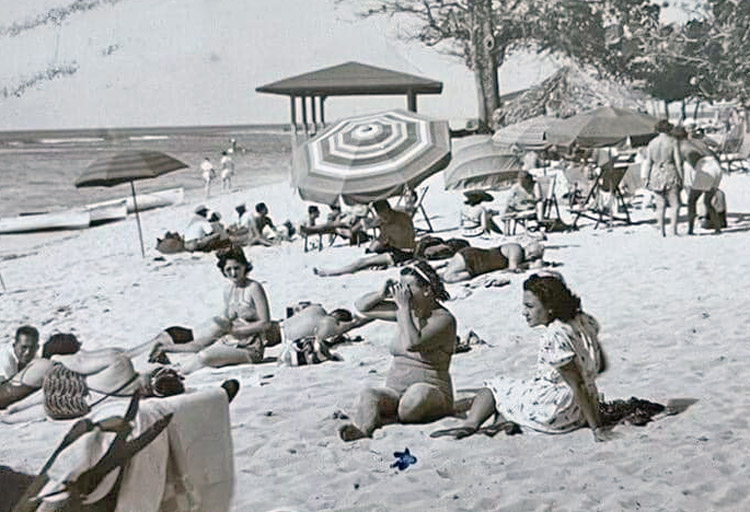
Waters explained the character of that revolution to the mostly young audience. “It was a massive social movement, with a leadership that lived up to its promises,” she said. “They nationalized the land and gave titles to landless peasants who tilled it. They led workers to take control of their factories and production. They organized and armed working people — women as well as men — creating disciplined militias ready to defend their gains. They opened the beaches and all public facilities to blacks. They slashed rents to 10% of a family’s income.
“And,” Waters pointed out, “in the Chinese ‘barrio’ it was the Chinese workers themselves who organized a militia unit and drove out the mafia, drug dealers, gambling dens and brothels,” for which Havana was infamous, worldwide.
A revolutionary history
The first Chinese came to Cuba as indentured laborers in the mid-19th century to work on the vast sugar plantations. Thousands joined the independence forces, fighting the Spanish colonial rulers (1868-98), organizing their own Chinese battalions. After indentured servitude was abolished in 1871, waves of new migration included wealthier traders. Over time the class composition of Chinese in Cuba became more mixed. And by the time of the 1899 census, a handful of wealthy Chinese owned some 42 sugar plantations. At the time of Cuba’s developing socialist revolution in the 1950s, there were both Chinese who supported the U.S.-backed Batista dictatorship and those — like the three Chinese Cuban generals — who joined the revolutionary movement.
Waters concluded by explaining the deep social and economic crisis in Cuba today, emphasizing its roots in “the implacable determination of the U.S. to crush the example of the Cuban Revolution. Washington is waging a war to destroy Cuba economically. They want to try to convince working people around the world that we can’t make a successful revolution. That a socialist revolution — not capitalism — inevitably leads to economic collapse and a police state,” she said.
A brief but lively discussion followed the presentations, with a number of questions about Cuba. One participant asked what China and Russia are doing to help Cuba.
Waters responded, “There is a lot of lip service from both governments, saying ‘We Stand with Cuba!’ There are many memoranda of agreement co-signed between Cuba and those governments but most often little is heard of them afterward. Few of the promised investments and projects materialize. There’s no mystery really. Moscow and Beijing are interested in profits and influence, not aid. And Russia faces its own economic crisis because of its invasion of Ukraine.”
When you hear about the U.S. military sending warships to the Caribbean, Waters said, “remember: The ultimate target is Cuba, and always will be, as long as the revolution lives and Cuban working people have the confidence and capacity to defend it. That is what they have proven for 67 years and counting.”